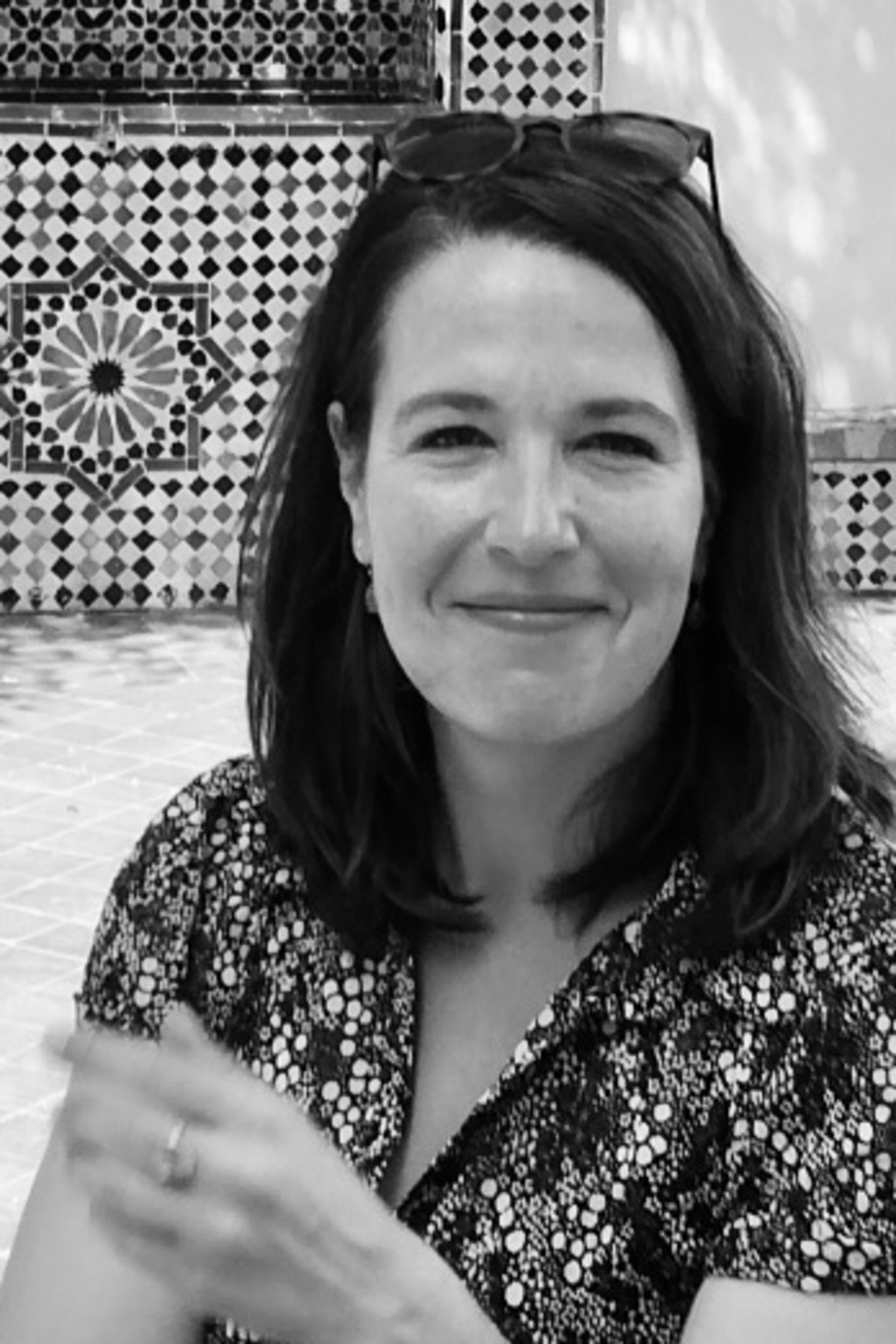
Dr. Nina ter Laan
Institute for Social and Cultural Anthropology
University of Cologne
Postdoctoral Researcher
nterlaan@uni-koeln.de
Kurzbiographie
Since 2020
Postdoctoral researcher, Department of Social and Cultural Anthropology, University of Cologne.
Member of SFB 1187 “Media of Cooperation,” sub-project (B04) (Digital) Publics and Social Transformation in the Maghreb.
2016–2020
Postdoctoral researcher, Religious Matters in an Entangled World-research group led by Prof. Birgit Meyer, Utrecht University.
2016
PhD in Religious Studies / Islam and Arabic Studies, Radboud University, the Netherlands.
Thesis: “Dissonant Voices: Islam-inspired Music in Morocco and the Politics of Religious Sentiments” (supervisor: Prof. Dr. Karin van Nieuwkerk).
2015–2016
Lecturer, Department of Middle Eastern Studies, Leiden University.
2013–2015
Lecturer, Department of Social and Cultural Anthropology, Leiden University.
2009–2016
PhD Candidate, Department of Islam and Arabic Studies, Radboud University, Nijmegen.
2003
MA in Cultural Anthropology, Radboud University, the Netherlands.
Thesis: “Imag(in)ed Identity: Representations of Berber Culture in Contemporary Moroccan Painting” (supervisor: Prof. Em. Henk Driessen).
Aktuelle Forschungsprojekte
Remediating the Rif: Transnational Memory Practices and Migrant Belonging between the Moroccan Rif and the Riffian diaspora in the Netherlands
My current research, which is part of the research consortium SFB 1187 "Media of Collaboration", investigates how Riffian communities in Morocco and the Netherlands engage with the colonial and postcolonial past through cultural productions in a context of (post-) migration. Through ethnographic fieldwork and close collaboration with Riffian artists and community members. Combining anthropology, memory studies, and arts-based methods, I trace how visual, sonic, and digital media circulate across borders and shape diasporic forms of memory and belonging. A central component of the project is the establishment of a Media Space, a collaborative environment for shared knowledge production and co-creation, established in close collaboration with local partners.
PI: Martin Zillinger
Funding: DFG
Abgeschlossene Forschungsprojekte
Hijra to Morocco among Dutch and Flemish Muslim Women: Ethnographies of home-making, religious transformations, and postcolonial positionings.
This project examined the hijra, or Islamic migration, of Dutch-speaking Muslim women (both born Muslims and converts) from the Netherlands and Belgium who settled in Morocco in search of religious freedom and an escape from Islamophobia. The project examined how these women shape their religious lives in relation to their cultural background, social class, and gender by focusing on home-making practices, such as domestic decoration and food practices. The project revealed that their migratory experiences intersect with postcolonial dynamics of racialization and social distinction. Paradoxically, while fleeing marginalization in Europe, many of these women gained a privileged position in Morocco as European and often white Muslims, thereby reinforcing the very hierarchies they sought to escape.
Funding: The Royal Netherlands Academy of Arts and Sciences (KNAW)/ Dutch Research Council (NOW)
Dissonant Voices: Islam-inspired Music and the Politics of Religious Sentiment in Morocco
This was my doctoral research, which focused on the role of Islam-inspired music in the construction of political ideas concerning Islam and citizenship in Morocco. Central were the musical practices and narratives of Muslim vocal performers. Based on thirteen months of anthropological fieldwork, two domains for Islam-inspired music were distinguished: state-sponsored stages for Sufi music and nonstate-sponsored stages for anashid, Islamic songs associated with ‘Islamism.’ I demonstrated that the distinction between these two domains primarily reflects a nationalist state rhetoric, regarding a ‘radical’ Islam and propagating Morocco as a ‘moderate’ Islamic country. However, the artists, their musical practices, and their political ideas do not always coincide with this polarized image of the state. Driven by commercial, religious, and political incentives they made strategic choices of musical style and identity. The project further showed that artists from both domains use music to generate religious sentiments meant to serve as a basis of ethical engagement and political thought.
Funding: Dutch Research Council (NWO)
Supervision: Prof. Dr. Karin van Nieuwkerk and Prof. Dr. Cees Versteegh