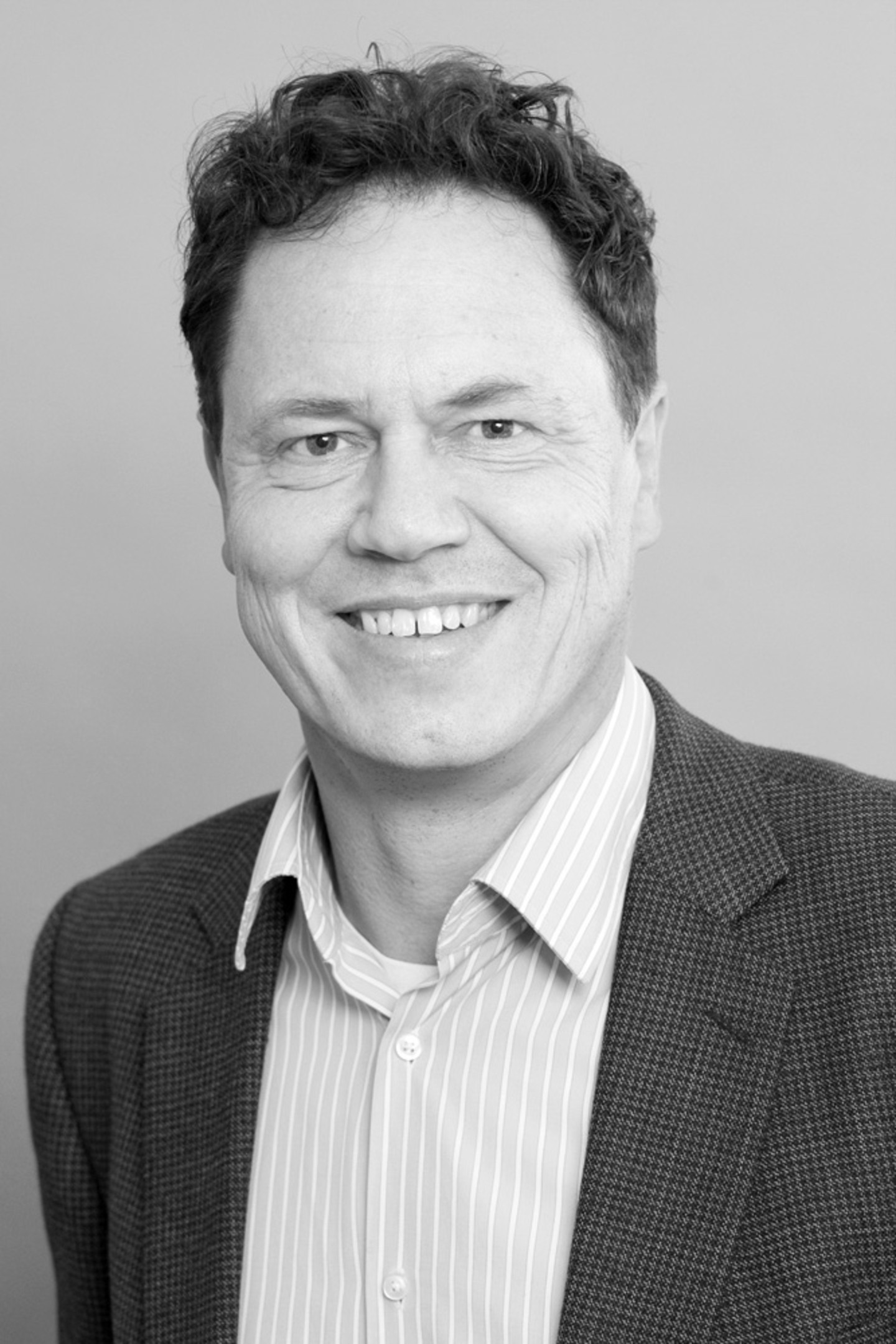
Prof. Dr. Boris Braun
Institute of Geography
Room: 1.11, Südbau
Otto-Fischer-Strasse 4
E-mail: boris.braun[at]uni-koeln.de
Phone: +49 221 470 4141
Short Biography
2008 - present
Full professor of Human and Economic Geography (W3), Department of Geography, University of Cologne
2003 - 2007
Full professor of Human Geography (C4), Department of Geography, University of Bamberg
2002 - 2003
University professor of Economic Geography (fixed-term contract) (C3), Faculty of Economics, University of Mannheim
1995 - 2002
Assistant professor (C1), Department of Geography, University of Bonn
1992 - 1995
Senior Research fellow, Department of Geography, University of Bonn
2001
Habilitation, University of Bonn
1994
PhD, University of Bonn
Research Interests
- Economic geography
- Industrial and urban change
- Environmental and risk management
- Environmental and social impacts of globalization
- Economic and social aspects of natural hazards
- Southern Asia, Australia, Western Europe
Academic Memberships
2022 - present
Chairman of the Association for Geography at German-speaking Universities and Research Facilities (VGDH)
2021 - present
Speaker of the sientific council 317 (Geography) of the German Research Foundation
2012 - present
Editorial Board, book series “KOALAS”
2008 - present
Editorial Board, journal “Zeitschrift für Australien-Studien“
2008 - present
Editorial Board, book series “Kölner Geographische Abhandlungen“
2003 - present
Editorial Board, book series “Wirtschaftsgeographie”
2003 - present
Guest editor of several special issues of academic journals, co-editor of several edited books
Current Research Projects
GSSP Graduate Scholarship Programme for foreign PhD students
In a competitive process, internationally oriented structured doctoral programmes are identified which receive a DAAD funding commitment for up to four DAAD-funded doctoral scholarships (two doctoral scholarships in each of two consecutive years) for foreign doctoral candidates.
Funding: DAAD
Website: www.daad.de
Duration: 2021-2025
Processes of commodification and standardization in tropical freshwater fish value chains – current and historical perspectives
The invention of the aquarium in the mid‐19th century spurred people’s desire to re‐create a piece of seemingly unspoiled ‘nature’ at home: a controlled ‘miniature wilderness’ with some self‐regulating characteristics. The early imports of tropical fish to Europe and the US were subject to high rates of mortality due to the use of simple technologies and the long duration of transport. Organizational and technological improvements boosted commodification processes, and the trade with tropical fish became more professional. These advancements also made it possible to breed more freshwater species in captivity, leading to an increase in the supply of tropical fish on European and North American markets. Today, more than half of all vertebrates in the global wildlife trade are fish species. Between 2000 and 2500 freshwater and marine species are traded regularly, but about 30 freshwater species dominate the global market. This not only reflects a high degree of standardization in the species traded and being commodified, but also the important role of international breed standards for popular species. Processes of standardization can be observed in at least three fields: (1) breed standards, (2) packaging standards for air and land transport, (3) the adoption of industry standards by farms, handling facilities etc. Global trade is channeled through and controlled by a network of dominant trading hubs: e.g. Singapore, Frankfurt, Amsterdam, Miami, Los Angeles. The existing studies on trade of ornamental fish have provided useful overviews of geographical trade patterns and the relevance of different species. Little attention, however, has been paid to the associated local and global value chains. Commodification of ornamental fish and their trade raise a number of ecological, social, and moral issues, such as the degradation of ecosystems, post‐shipment mortality, or the protection of livelihoods of small‐scale fishers and breeders. The focus of this project will be on commodification processes and the development of standards that are related to it. Conceptually, this research reflects both discursive and non-anthropocentric (multi-species) perspectives. The aim is to study two different and partly competing types of value chains for farm‐raised fish and for fish caught in the wild. The methodology is mainly based on qualitative interviews with actors along the value chains in (1) Singapore and neighboring fish‐farm regions (value chains of farm‐raised fish), (2) Tanzania (wild catch value chains), and (3) Frankfurt and Amsterdam (importers, wholesalers). In addition to these interviews, leading fish keeping journals from the 1870s onward will be analyzed to gain a deeper historical perspective on commodification and standardization processes. These analyses will also provide deeper insights into the changing understanding of tropical fish being something natural, authentic or wild, or domesticated pets.
This project is closely linked to another DFG-funded research project from Anthropology by Clemens Greiner (Köln) and Eric M. Kioko (Nairobi / Bonn): S(m)elling the ‘Wild’: The Political Ecology of Arboreal Essential Oils and the Making of Olfactory Resources.
Funding: DFG since 2024
Past Research Projects
SeaLevel TRANSOCAP - Building adaptive capacity through translocal social capital. Sea level rise and resilience of coastal communities and households in Indonesia
Description:
Adaptation to coastal flooding and storm surges is a major challenge for the low lying coastal areas of Indonesia. The situation is further aggravated by land subsidence rates up to 15 cm/yr in some areas of Jakarta and Semarang. In this situation, research on adaptation and coping processes towards past, current, and future coastal hazards and sea level rise is crucial to understand socio-economic impacts and adaptive responses of coastal communities and individual households.
This project is based on the central hypothesis, that translocally anchored social capital plays a key role for building adaptive capacity. Through processes of migration and trans-local networking, people establish social interactions and networks of trust that link coastal rural areas to regional urban centres, megacities, and foreign localities. Through these networks, individuals and communities have access to remittances, loans, mutual help, information, and knowhow that may become valuable resources for community resilience and innovative adaptation (fig. 1).
The project aims to decipher the relations between translocally organised social capital, rural-urban interactions, and adaptive capacity. The goal is to analyse how the (translocal) social capital of coastal communities is structured and how it enables the endowed people to cope with short-term hazards (e.g. cyclones and floods) as well as to adapt to the slowly emerging and less perceivable sea level rise.
Support:
DFG (SPP 1889)
Duration:
2016 - 2024
Re-Islamisation between state influences and gobal muslim networks
Description:
The project deals with the actors of re-Islamisation, their involvement in translocal networks, their aims and activities and their relation to the state.
Region: Asia
Department: Institute for Geography
Research Area: Natural Commodities and Changing Markets in the Global South
Period: 2011-01 to 2015-12
Person(s): Boris Braun
Economic and social drivers of land use change in coastal Bangladesh
Region: Asia
Department: Institute for Geography
Link:www.geographie.uni-koeln.de
Research Area: Natural Commodities and Changing Markets in the Global South
Period: 2013-01
Person(s): Boris Braun; Amelie Bernzen
INGENoS: Indo-German Network Interaction of Scientists
Objectives:
- Development and establishment of an interdisciplinary research and teaching cooperation format
- Intensification of partnership-based cooperation on an institutional level
- Inclusion of further partners from science and industry
Cooperation Partners: Indian Institute of Science (IISc) Bangalore
Funding: DAAD
Duration: 2020-2024